
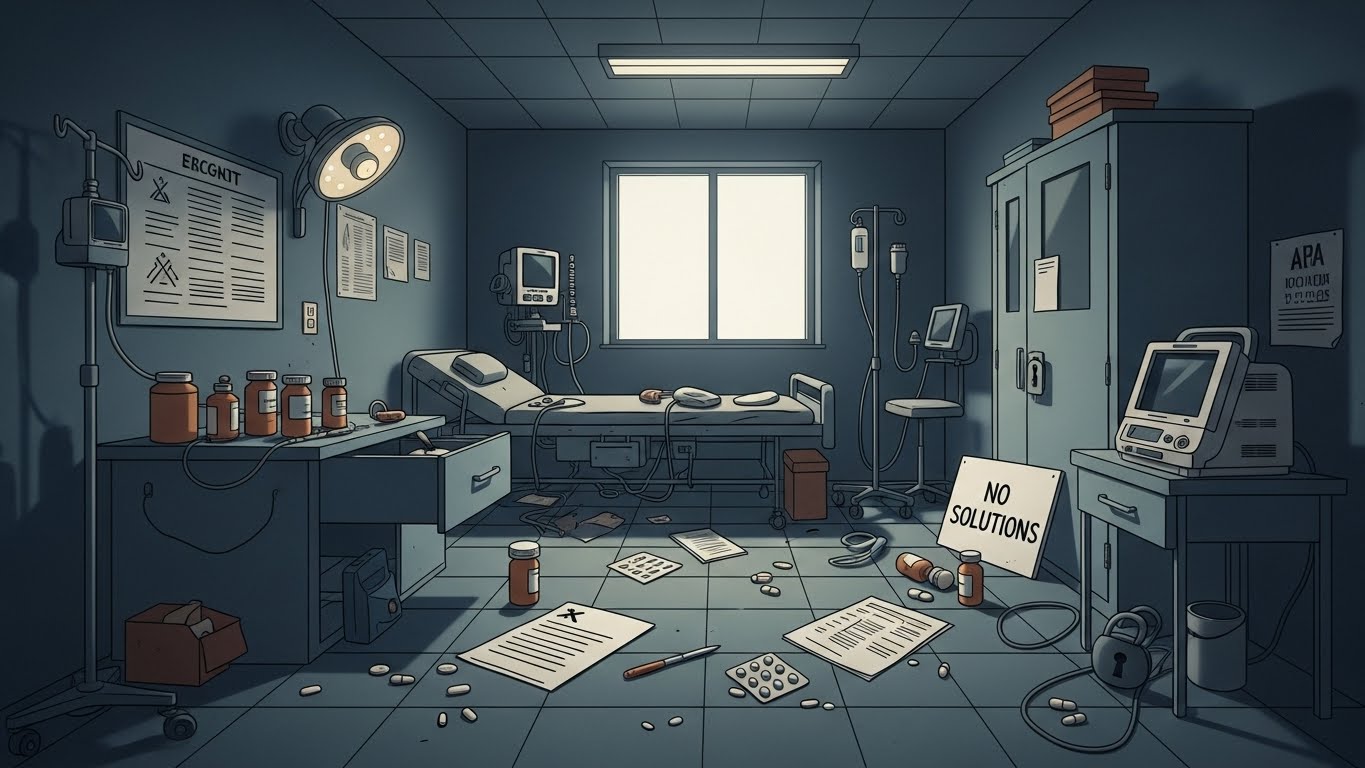
1. The Nature of Chronic Pain: Hidden, Subjective, Complex
Chronic pain differs fundamentally from a “textbook disease.” Unlike a broken bone or an acute infection, chronic pain often lacks a clear pathology, objective lab test, or imaging abnormality. Pain is deeply subjective and depends on a variety of factors beyond detectable tissue damage. Biological, psychological, lifestyle, and social contexts shape how pain is perceived and maintained [5,6,19].
Pain often persists long after any initial injury might have healed, or arises without identifiable tissue damage at all. As such — though very real in suffering — chronic pain resists the standard diagnostic frameworks most of healthcare was built to address. This complexity makes chronic pain a “misfit” in a system optimized for discrete, acute illnesses.
Because of this, many chronic pain sufferers experience what has been called epistemic injustice — their accounts of suffering are dismissed or disbelieved when they lack objective evidence [3,4]. In short, the invisibility of chronic pain makes it fundamentally different from most conditions modern medicine was designed around.
2. The Biomedical Model: Built for Acute Disease, Not Chronic Suffering
The dominant paradigm in medicine — the biomedical model — assumes diseases present with observable pathology, measurable markers, and a treatment (drug, surgery, procedure) that resolves the issue. This model excels in acute care.
But chronic pain rarely fits these assumptions. Because no universal biomarker or imaging finding reliably identifies “pain,” chronic pain challenges the core premises of the biomedical model.
In response, many experts since the 1970s have promoted a biopsychosocial model: pain arises from the interplay between biological, psychological, and social factors — not just tissue damage [5,12]. However, the shift from theory to practice has been slow. As even critics of the biopsychosocial model note, in real-world pain medicine, the old biomedical logic often still predominates: treatments remain fragmented, interventions are symptom-targeted, and the social/psychological dimensions of pain remain underappreciated [6,17].
Thus, what science may recognize — that pain is complex — the system often fails to operationalize. Chronic pain patients end up treated under frameworks never designed for them.
3. Why Pain Patients Often Get the Short End of the Stick
a) Lack of objective measures → credibility problem
When medical decisions depend heavily on lab results or imaging, conditions without clear objective markers suffer. For chronic pain sufferers, this often means being viewed with suspicion — or even disbelief. Research documents widespread dismissals of chronic pain as “all in the head,” or patients being told their symptoms are psychosomatic when imaging is normal [3,4].
This is more than a semantic issue: such epistemic injustice can delay or prevent appropriate care, and inflict additional psychological distress and stigma.
b) Perverse incentives: quick, billable fixes over long-term care
The structure of modern healthcare — how doctors are reimbursed, how clinics and hospitals operate — incentivizes short, procedure-based interventions: drugs, injections, surgeries. These are easier to bill, easier to measure, and faster to deliver. But chronic pain rarely responds to quick fixes.
As noted by health-system reviews, many clinicians lack time or resources to offer holistic, patient-centered, multidisciplinary pain care, leading to care that’s narrowly focused — often around opioid reduction or symptomatic relief rather than root causes [1,20].
As a result, patients may receive repeated unsuccessful treatments, or even be shuffled between providers — with no one truly addressing the complexity of their pain.
c) Fragmentation, lack of coordination, and resource constraints
Effective chronic pain care often requires multidisciplinary and longitudinal intervention: physicians, pain specialists, physical therapists, psychologists or counselors, lifestyle coaching, social support — often over months or years.
But the healthcare infrastructure rarely supports such holistic pathways. According to a study interviewing healthcare providers, chronic pain management “occurs in a complex care context complicated by the multidimensional, subjective nature of pain,” with “lack of time and resources to manage pain holistically,” and “limited or no processes for handling patients with chronic pain across care trajectories” [1,21].
Moreover, during COVID-19 and beyond, many physicians report insufficient access to allied health professionals, long wait-lists, and poor coordination between care settings [22]. The end result: many chronic pain patients receive fragmented, inconsistent, or inadequate care.
d) Stigma, disbelief, and systemic invalidation
Because chronic pain is invisible and subjective, many patients suffer not just physical suffering, but also psychological and social harm. Studies show that patients’ reports are often discounted when lacking “medical evidence,” leading to reduced credibility, stress, and even self-doubt [3,23].
This dynamic discourages patients from seeking help, fosters isolation, and reinforces the invisibility of their suffering. In a system designed around measurable disease, chronic pain becomes a liability — not a legitimate condition warranting trust and care.
4. The Costs — Personal, Social, and Economic
Chronic pain is not rare. According to leading reviews, roughly 20% of adults worldwide suffer from chronic pain; about 10% develop new chronic pain each year [2]. In the U.S. alone, estimates suggest that as many as 100 million adults are affected [19], and chronic pain costs the nation between USD 560–635 billion annually when accounting for medical treatment, lost productivity, and disability [13].
But beyond numbers lies human cost: pain reduces physical functioning, interferes with sleep and mental health, undermines work, erodes relationships, and identity. Many chronic pain patients describe feeling disbelieved, stigmatized, or abandoned by the very system meant to help [3,4].
In effect, chronic pain has become a public health crisis and an ethical challenge for modern medicine.
5. Why This Isn’t Just “Bad Medicine” — It’s Structural
It’s easy to say, “If only doctors cared more.” But the problem is not individual providers; it is the system design itself. Several structural factors maintain this failure:
Medical education remains focused on acute, acute-disease pathology; most curricula devote minimal hours to pain medicine and even less to chronic pain care [1,18].
Payment and reimbursement systems reward procedures, not long-term, multidisciplinary, personalized care, which is harder to measure and bill [1,16].
Care pathways are fragmented; patients are forced to navigate a complex web of specialists, often without coordination or continuity [1,21,22].
Research and clinical guidelines often lag behind lived reality; chronic pain is heterogeneous, but medicine tends to rely on “one-size-fits-all” models rooted in acute disease logic [6,17].
Because chronic pain often lacks an objective marker, patients are vulnerable to being dismissed — a social and epistemic bias that disadvantages the already vulnerable [3,4].
Thus, even well-meaning clinicians working within the existing structure are constrained by incentives, norms, and institutional inertia. The result: chronic pain remains underrecognized, under-treated, and misunderstood.
6. What a “Pain-Friendly” Healthcare System Would Look Like
If we were to redesign healthcare with chronic pain in mind, what changes would matter? Based on the critiques above and recommendations from pain experts, the following would help:
Recognition of chronic pain as a legitimate disease, even when no abnormal imaging or lab results exist — legitimizing patient testimony rather than discounting it [19].
Adopting a true biopsychosocial model in practice — integrating biological, psychological, social, behavioral, and lifestyle factors into assessment and care — not just as a theory, but as standard practice [5,12].
Multidisciplinary, integrated care, combining physicians, physical therapists, psychologists or counselors, lifestyle coaches, and social supports — sustained over time.
Patient-centered, long-term care plans that emphasize quality of life, function, self-management, education, and not only symptom suppression.
Payment and reimbursement reform to support prevention, long-term follow-up, and non-procedural interventions — making holistic care financially viable.
Provider and public education to reduce stigma, increase health literacy, and value patient-reported outcomes and lived experience.
This is not a utopia — some systems (e.g., pain clinics, integrated care models, chronic disease frameworks) already attempt parts of this. But until such changes are widespread, many chronic pain sufferers will remain underserved.
7. Why it Matters: Ethical, Social, and Human Consequences
The mismatch between chronic pain and modern healthcare is not an academic quibble — it has real human consequences. Chronic pain often leads to disability, psychological suffering, economic hardship, and social isolation.
When patients’ suffering is ignored or minimized, the harm multiplies: reduced trust in the medical system, delayed or missed diagnoses, worsening of pain and comorbidities, and sometimes a lifetime of ineffective treatments or harmful side effects.
Declaring chronic pain a legitimate, complex, and deserving condition — and building systems capable of treating it — is not only a medical imperative but also a social justice issue: it demands dignity, empathy, and institutional responsibility for people whose pain is “invisible.”
8. Conclusion: The Need for a Paradigm Shift
Modern healthcare, as currently structured, was never designed to care for many people living with chronic pain. The model doesn’t fit — the incentives, training, funding, care pathways, and norms all contradict the realities of chronic, subjective, long-term suffering.
Recognizing that chronic pain is common, debilitating, and deserving of empathy and comprehensive care means we must demand systemic change.
The path forward is clear: shift from quick fixes to long-term, integrative, patient-centered approaches that honor suffering, validate experience, and support adaptation and healing — in body, mind, and life.
That’s precisely the mission of HealthX360. Through education, holistic thinking, and advocacy, we can contribute to a future where chronic pain is understood — and cared for — not ignored.
References
Institute of Medicine. Relieving Pain in America: A Blueprint for Transforming Prevention, Care, Education, and Research. Washington (DC): The National Academies Press; 2011.
Goldberg DS, Ho A, Buchman DZ. Investigating trust, expertise, and epistemic injustice in chronic pain. J Bioeth Inq. 2017;14(1):31–42.
Rosàs Tosas M. The downgrading of pain sufferers’ credibility. Philos Ethics Humanit Med. 2021;16:8.
Reflections on epistemic injustice to advance person-centred care through the experiences of persons with chronic pain. J Bioeth Inq. 2025.
Engel GL. The need for a new medical model: a challenge for biomedicine. Science. 1977;196(4286):129–36. (As discussed in reviews of the biopsychosocial model)
Gatchel RJ, Turk DC. The biopsychosocial model and chronic pain: Scientific advances and future directions. Pain. 1999; (reviewing limitations and clinical challenges of applying the model).
Polacek C, Christopher R, Mann M, et al. Healthcare professionals’ perceptions of challenges to chronic pain management. Am J Manag Care. 2020;26(4):e135–e139.
Physician perspectives on chronic pain management: barriers and the use of eHealth in the COVID-19 era. BMC Health Serv Res. 2023;23:1131.
Pain as a global public health priority. BMC Public Health. 2011;11:770.
Glajchen M. Chronic pain: treatment barriers and strategies for clinical practice. J Am Board Fam Pract. 2001;14(3):211–8.
